Behind the Velvet Rope: How Bangkok's Most Secretive Venues Work — And How to Actually Get Through the Door
There's a version of Bangkok nightlife that exists entirely off the map. No TripAdvisor listing. No Instagram geotag. No walk-up line snaking down the sidewalk. Just a name passed between the right people, a WhatsApp message to someone who knows someone, and a door that opens — or doesn't — based entirely on who vouched for you.
This is the world of Bangkok's invite-only venues, and it's growing faster than most outsiders realize.
For American travelers used to the Vegas model — pay enough, show up early, flash the right credit card — the whole concept can feel disorienting. But understanding why these spaces exist, and how they actually operate, changes the experience completely. You stop trying to buy your way in and start doing the thing that actually works.
Why Bangkok Started Closing Its Doors
The shift toward exclusivity didn't happen overnight, and it wasn't purely about snobbery. A lot of it was practical.
As Bangkok's nightlife scene exploded in popularity — fueled by travel content, social media exposure, and a post-pandemic surge in international tourism — certain venues started struggling with a problem most businesses would kill to have: too much attention. Spaces designed for 80 people were suddenly fielding crowds of 300. The intimate, curated energy that made them special in the first place started eroding under the weight of foot traffic.
The response from the city's most design-forward operators was to stop advertising entirely. Some quietly removed themselves from booking platforms. Others switched to a referral-only door policy. A few went further, operating without a physical sign, a searchable name, or any public-facing presence whatsoever.
The result is a two-tier nightlife ecosystem. There's the visible layer — rooftop bars, cabaret theaters, cocktail lounges with polished websites and reservation systems — and then there's the layer underneath, accessible only through relationships and reputation.
What These Spaces Actually Look Like
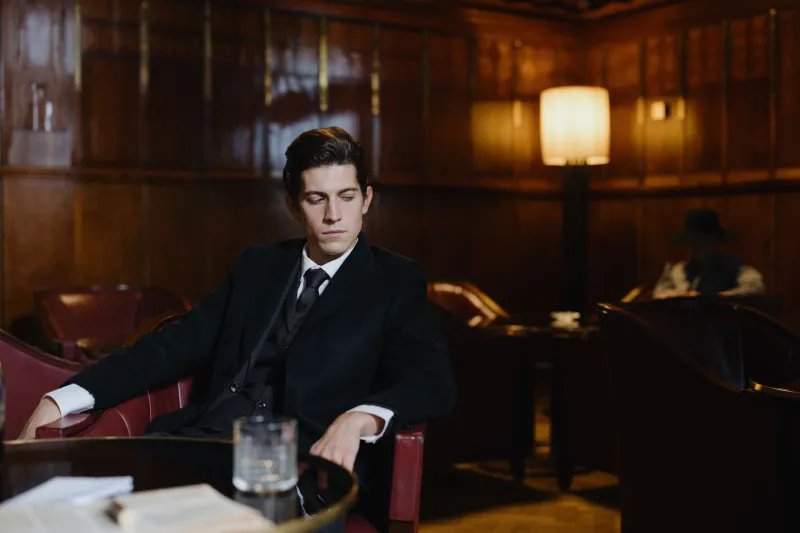
Forget the velvet rope cliché. Bangkok's most exclusive venues aren't trying to perform exclusivity for an audience. They're genuinely private in a way that feels almost residential.
Many are housed in converted shophouses or upper floors of unremarkable buildings, with nothing on the exterior to suggest what's inside. You might find a 12-seat cocktail bar where the menu changes weekly based on whatever the bartender felt like experimenting with. Or a supper club running a single seating of 20 guests, with a set menu built around a performer who may or may not be well-known outside certain circles. Or a lounge that functions partly as a gallery, partly as a listening room, partly as a social space for a specific creative community.
The common thread isn't luxury in the traditional sense. It's intentionality. Every element — the guest list, the playlist, the lighting, the pour — has been considered. Nothing is accidental. Nothing is scaled for volume.
This is, not coincidentally, exactly the kind of experience that photographs terribly and travels beautifully.
The Unwritten Rules of the Room
If you somehow land an invitation to one of these spaces, the etiquette shifts considerably from what you might expect at a standard Bangkok bar.
Phones stay in pockets unless you've read the room carefully and confirmed that documentation is welcome. Many of these venues operate on an implicit no-photography policy — not because they're hiding anything illicit, but because the atmosphere is the product, and nothing kills atmosphere faster than a table of people holding up their screens.
You're also expected to be present in a real sense. Conversations happen. Introductions get made. The person who sits in the corner scrolling for two hours tends not to get invited back.
And critically: you don't talk about the venue publicly in ways that could generate unwanted traffic. This is the social contract that keeps these places functioning. Mention it to a friend who'd genuinely appreciate it, sure. Post the address in a Facebook travel group with 40,000 members, and you've violated the whole arrangement.
How Americans Are Actually Getting In
Here's the honest answer: the tourists who successfully access these spaces almost never set out specifically to find them. They find them as a byproduct of doing everything else right.
Spend real time in Bangkok's more interesting mid-tier venues — the kind of cocktail bars and intimate music spots that attract local creative professionals rather than tour groups. Be a good guest. Tip thoughtfully. Ask genuine questions. Show up more than once. Build actual rapport with the staff and regulars rather than treating every interaction as a transaction.
The city's nightlife community is smaller and more interconnected than it looks from the outside. Bartenders talk to each other. Promoters know the door people. The person you had a genuinely good conversation with on a Tuesday night might be exactly who texts you a week later with a plus-one to something you won't find on any list.
Hotels can also be a legitimate access point — specifically, the concierge teams at properties that cater to a more discerning international clientele. Not every concierge has these connections, but the good ones do, and they're often willing to make introductions for guests who've demonstrated they're not going to embarrass anyone.
Another underrated move: follow the performers. Bangkok's most compelling cabaret artists, jazz musicians, and installation creators often have a parallel world of private events running alongside their public work. Following their careers closely — and engaging with that work authentically — puts you in the orbit of the people who organize and attend the more exclusive side of things.
What Not to Do
A few approaches that reliably don't work, and occasionally get people quietly blacklisted.
Asking directly. "Hey, do you know any secret bars?" is a sentence that immediately signals you don't understand how any of this works. The question itself is the disqualifier.
Offering money. Bangkok's invite-only culture is specifically a reaction against the pay-to-play model. Trying to buy access not only fails, it marks you as someone who fundamentally misunderstands the value proposition.
Name-dropping aggressively. Mentioning that you know someone, when you've actually just met them once, tends to get verified quickly in a tight-knit community. The embarrassment isn't worth it.
And perhaps most importantly: don't treat getting in as the goal. The venues that are worth finding are worth finding because of what happens inside them — the quality of the experience, the people you meet, the sense that you're somewhere genuinely alive and uncontrived. If you're approaching the whole thing as a status achievement to screenshot, you're missing the point entirely.
The Bigger Picture
Bangkok's move toward exclusivity is part of a broader shift happening in nightlife globally — a pushback against the homogenization that social media tends to accelerate. When every bar becomes a content backdrop, the bars that matter most find ways to opt out of that economy entirely.
For American travelers willing to slow down, invest in genuine connections, and approach the city with curiosity rather than a checklist, those doors open more often than you'd think. Bangkok is, at its core, an extraordinarily generous city. It rewards the people who show up for it honestly.
The invite, when it comes, rarely looks like an invitation. It looks like a friend saying: come out tonight, there's somewhere I want to show you.
That's the whole game, really.