Gossamer and Gold: How Bangkok's Nightlife Scene Fell Head Over Heels for the Sylph Aesthetic

Photo by Photo by Ali Kazal on Unsplash on Unsplash
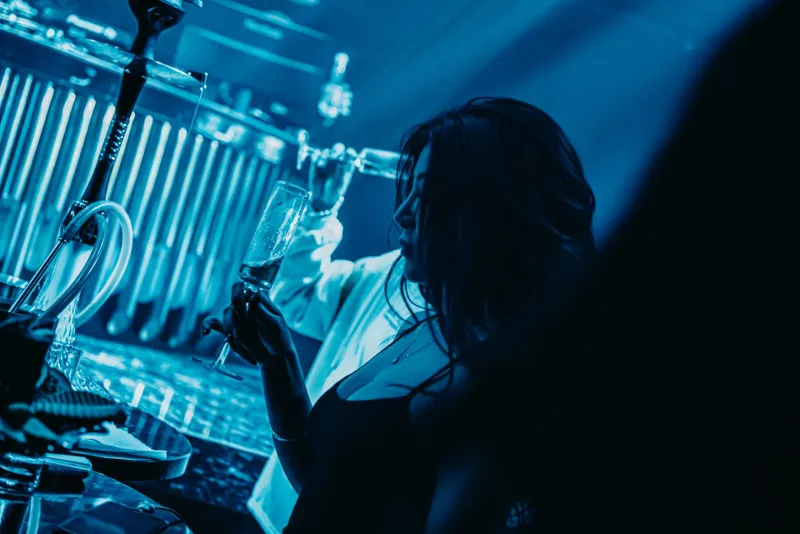
There's a moment that happens to almost every first-time visitor to one of Bangkok's more elevated nightlife venues. You walk in, you take a breath, and something shifts. The air feels different. The light catches wrong — or maybe exactly right. The women moving through the space seem to float rather than walk. You spend the rest of the night trying to identify what exactly is doing that to you, and you probably never quite land on an answer.
That feeling has a name. In design circles, venue philosophy conversations, and the increasingly global conversation around Bangkok's nightlife identity, they call it the Sylphy Effect.
What Even Is a Sylph, Anyway?
If you grew up in the US, the word "sylph" might ring a faint bell from a high school lit class — maybe Alexander Pope's The Rape of the Lock, maybe a footnote in a mythology textbook. In classical European tradition, a sylph is an elemental spirit of the air: feminine, translucent, impossibly graceful, hovering at the edge of the visible world. Not quite human, not quite divine. Just... luminous.
Bangkok's nightlife designers didn't exactly lift the concept wholesale from 18th-century poetry. But somewhere in the last decade, a convergence happened. Thai aesthetic traditions — which have always held space for supernatural feminine archetypes, from the celestial apsara dancers to the forest spirit nang mai — began blending with a global mood board that fetishized the ethereal, the delicate, and the transcendent. The result is a design and operational philosophy that's now quietly running some of the most coveted venues in the city.
Designing for the Feeling, Not the Feature
Spend any time talking to the people who build Bangkok's top-tier nightlife spaces and a pattern emerges fast. They don't lead with the chandelier inventory or the cocktail menu. They lead with the feeling they're engineering.
"We don't design rooms. We design emotional states," is how one Bangkok-based venue creative director put it during a recent industry panel. The goal isn't to impress you with a spec sheet. It's to make you feel like you've stepped sideways out of ordinary reality into somewhere that operates by softer rules.
The tools they use to get there are surprisingly specific. Lighting is almost always the first lever — warm, diffused, never harsh, often filtered through sheer fabric or frosted glass so it arrives at your skin already gentled. Sound is engineered to feel like it's coming from everywhere and nowhere simultaneously, ambient enough that conversation doesn't feel like a battle, immersive enough that silence never quite arrives. Scent design is taken seriously in a way that would genuinely surprise most American visitors, with custom fragrance profiles built into the venue's HVAC system.
And then there's the human element, which is where the sylph philosophy gets most intentional.
The Living Aesthetic: Staff, Performers, and the Art of Presence
In venues operating under what you might call the full sylph model, the staff and performers aren't just employees — they're curated extensions of the space's emotional architecture. Movement training is common. Some venues bring in classical Thai dance coaches to work with floor staff on posture, gesture, and the specific quality of attention they bring to interactions with guests.
This isn't about objectification or performance in any reductive sense. It's closer to what theater directors call presence — the quality of being fully, deliberately inhabiting a space in a way that makes everyone around you more aware of being alive. When it works, and in Bangkok's best venues it often does, the effect on guests is genuinely hard to shake.
American travelers in particular seem to find this aspect of the experience disorienting in the best possible way. Back home, nightlife tends to run on a different frequency — louder, more kinetic, optimized for stimulation over enchantment. The sylph aesthetic operates on the opposite principle. Less is engineered to feel like more. Restraint becomes a form of intensity.
Why Americans Keep Falling for It
There's a pretty solid psychological argument for why US visitors are especially susceptible to the sylph effect. American nightlife culture, broadly speaking, has spent decades perfecting the art of the overwhelming — bigger sound systems, more aggressive VIP culture, bottle service as status theater. It's an aesthetic built on impact.
The sylph aesthetic works through a completely different mechanism. It's seductive rather than impressive. It invites you to lean in rather than knocking you back. For visitors who've been thoroughly trained by the American nightlife playbook, encountering something that pulls rather than pushes can feel genuinely revelatory.
There's also something to be said for the cultural novelty. The specific blend of Thai spiritual tradition, Southeast Asian femininity archetypes, and contemporary design sophistication that Bangkok's best venues have developed doesn't have a real equivalent anywhere in the American entertainment landscape. It reads as exotic without being alienating, mysterious without being inaccessible.
The Philosophy Behind the Aesthetic
What makes the sylph trend interesting beyond its surface appeal is that the best venues treat it as a genuine operational philosophy rather than a decorative choice. It shapes hiring decisions, training programs, menu design, event curation, and even the way complaints are handled. The goal is coherence — every touchpoint in the guest experience should reinforce the same emotional register.
Venues that do this well tend to develop cult followings that cross cultural lines remarkably easily. The language barrier doesn't matter much when you're communicating primarily through atmosphere. Thai regulars and American tourists end up having essentially the same experience, filtered through different cultural lenses but landing in the same emotional place.
That universality is probably the most quietly radical thing about the sylph aesthetic. It's not trying to be all things to all people. It's betting that certain frequencies of beauty and grace translate without needing translation.
What to Look For When You're There
If you're heading to Bangkok and want to find venues operating on this frequency, the markers are subtle but consistent. Look for spaces that feel quieter than they should be for how full they are. Watch for staff who move with unusual deliberateness. Notice whether the lighting makes your skin look like you're standing in late afternoon sun rather than under fluorescent tubes. Pay attention to whether the scent of the room has been considered as intentionally as the music.
And if at some point during your evening you find yourself struggling to explain exactly why you don't want to leave — why the idea of stepping back out onto the Bangkok street feels like a small loss — you've found it. That's the Sylphy Effect doing exactly what it was designed to do.
Some spells are worth falling for.