Sylphs, Spirits, and Sequins: The Thai Mythology Powering Bangkok's Most Glamorous Nightlife
Walk into the right Bangkok nightclub or performance venue and you'll notice something that's hard to put your finger on at first. The aesthetics are stunning, sure — the lighting, the costumes, the architectural details. But there's something else underneath it all. A quality that feels intentional in a way that goes beyond interior design. A sense that the space is trying to tell you something about beauty, transcendence, and the line between the human and the divine.
That feeling has a cultural source. And understanding it will change how you experience Bangkok's entertainment scene entirely.
What Is a Sylph, Exactly?
In Thai mythology and classical literature, celestial beings known broadly as kinnari (half-human, half-bird figures) and apsara (heavenly dancers) occupy a space between the earthly and the divine. These aren't quite angels in the Western sense — they're more fluid than that, more sensual, more connected to art and performance as spiritual acts.
The Western concept of a sylph — an elemental spirit associated with air, grace, and ethereal beauty — maps surprisingly well onto these Thai counterparts. Both traditions imagine beings who exist at the threshold of the mortal world: luminous, untouchable, and deeply connected to the idea that beauty itself is a form of transcendence.
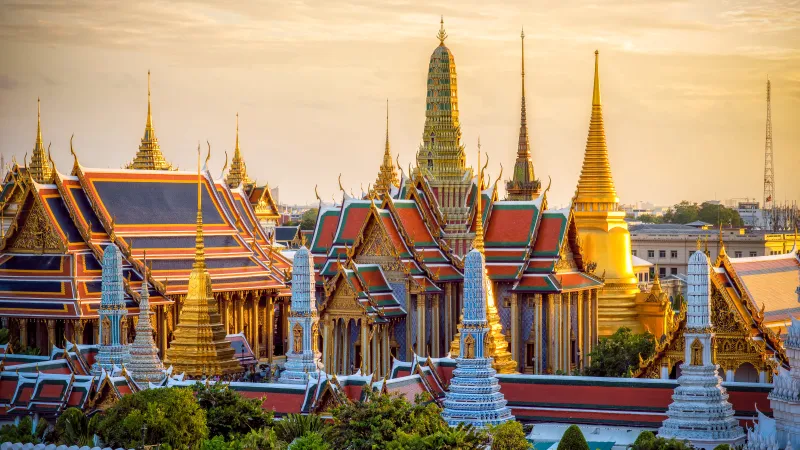
In Thailand, these figures appear in temple murals, classical dance performances, royal iconography, and literature going back centuries. They're not obscure mythology — they're woven into the national visual language. A Thai person encountering sylph imagery in a nightlife context isn't seeing something exotic. They're seeing something familiar, reimagined.
How Mythology Becomes Atmosphere
Bangkok's premium entertainment venues didn't stumble into this aesthetic by accident. The most sophisticated spaces in the city — the ones that draw both well-heeled locals and international visitors — are often quite deliberate about drawing on this symbolic vocabulary.
You see it in the way performers are costumed: flowing fabrics that suggest movement even in stillness, headdresses that echo classical dance traditions, makeup that heightens rather than humanizes. You see it in the architectural choices: soaring ceilings, reflective surfaces, lighting designed to make the space feel like it exists slightly outside of ordinary reality.
You hear it in the music, which at the best venues layers traditional Thai instruments — the ranat (xylophone), the khim (hammered dulcimer), the saw duang (fiddle) — under contemporary electronic production in a way that feels genuinely timeless rather than gimmicky.
The cumulative effect is an environment that feels charged with significance. Not in a heavy, religious way — Bangkok's nightlife is not a solemn affair — but in the sense that the people who built these spaces believed they were doing something worth doing. That comes through.
Why This Hits Differently Than Western Nightlife
American nightlife is great at spectacle. Vegas knows how to overwhelm your senses. New York knows how to make you feel like you're at the center of the universe. Miami knows how to make everything feel effortlessly cool.
What most Western nightlife doesn't do particularly well is connect the experience to something older and deeper. The references tend to be contemporary — pop culture, celebrity, wealth as its own aesthetic. The mythology, if there is any, is usually borrowed or ironic.
Bangkok operates differently. When a venue here invokes celestial symbolism, it's drawing on a living cultural tradition that the performers, the designers, and much of the audience actually grew up with. The mythology isn't decoration. It's context.
That's why even a casual night out at the right Bangkok venue can feel strangely meaningful to American visitors who can't quite articulate why. You're not just being entertained. You're being invited into a worldview.
Reading the Room: A Quick Cultural Decoder
If you want to get more out of Bangkok's premium nightlife scene, here are a few symbolic threads worth knowing how to spot:
Gold and white together often signal celestial themes — these are the colors associated with divine figures in classical Thai iconography.
Elaborate headdresses on performers are rarely just costume choices. The mongkut (crown-like headdress) has deep roots in classical Thai performance traditions and signals a connection to royal and divine aesthetics.
Floral offerings or garlands in venue decor aren't just pretty. Jasmine and marigold arrangements carry ritual significance in Thai culture and are often used to create a sense of sacred space.
Mirror and water motifs recur frequently in venues drawing on sylph-adjacent mythology — these elements represent the threshold between worlds, the liminal space where celestial beings are said to dwell.
The Mystique Is Earned
It's tempting to view Bangkok's entertainment scene through a purely aesthetic lens — to appreciate it the way you'd appreciate a beautifully designed hotel lobby. And there's nothing wrong with that. The visuals alone are worth the trip.
But Bangkok's best nightlife venues offer something more layered than that. They're operating within a cultural tradition that treats beauty, performance, and communal gathering as genuinely meaningful activities — not just ways to pass the time.
For Western visitors who've been underwhelmed by the sameness of nightlife back home, that depth is exactly what makes Bangkok feel so magnetic. You don't have to understand every symbolic reference to feel the difference. You just have to show up willing to let the city surprise you.
And Bangkok, as anyone who's spent real time here will tell you, is very good at that.