How Bangkok's Best Venues Are Engineered to Make Hours Feel Like Minutes
You sit down, order a drink, glance at your phone — and somehow it's 2 a.m. You could've sworn you arrived at nine. You're not losing your mind. You're just in a really, really well-designed room.
Bangkok's elite entertainment venues have quietly become some of the most sophisticated sensory environments on the planet. Not because of any single gimmick, but because of how dozens of small design decisions layer on top of each other to create something that feels almost magical — and deeply hard to leave. Locals call it the sylph effect: that weightless, timeless sensation that settles in when a space has been built to pull you fully out of the ordinary world.
For American travelers used to Vegas-style spectacle or the dimly lit dive bar aesthetic back home, Bangkok's approach to venue design can feel genuinely disorienting — in the best possible way. So let's break down what's actually happening, room by room, drink by drink.
Lighting That Works Like a Mood Drug
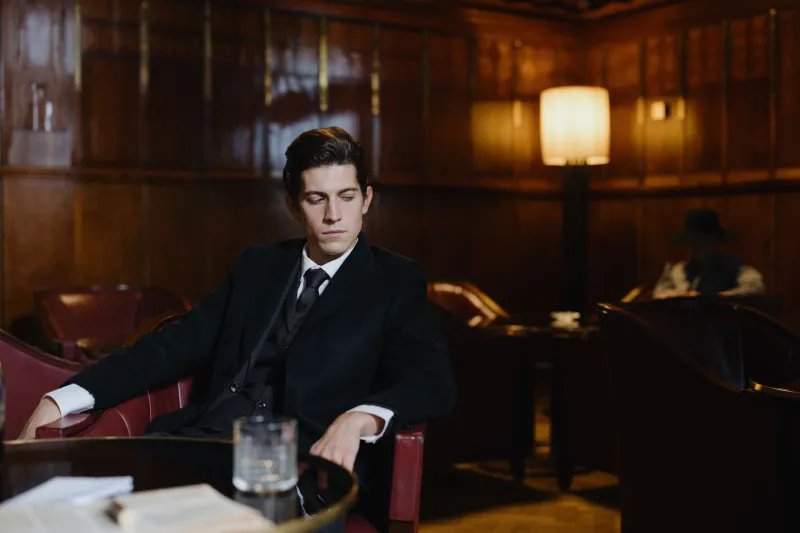
The first thing any serious Bangkok venue gets right is light. Not just the quantity of it, but the temperature, direction, and rhythm. Most top-tier spots operate somewhere between 1,800 and 2,700 Kelvin — that warm amber glow that makes everyone look like they're lit by candlelight even when they're not. It's flattering, sure, but it also signals to your nervous system that you're somewhere safe and intimate.
Beyond warmth, the best venues use layered lighting: a soft ambient base, targeted accent lights on architectural details, and subtle spotlighting on performers or bar stations. The effect is that your eye never settles in one place for long — there's always something slightly more interesting to look at just a few feet away. That constant, gentle visual pull keeps your attention inside the room and off the clock on your wrist.
Some venues take it further with slow, almost imperceptible light transitions — a barely noticeable shift from gold to rose to deep violet over the course of an evening. By the time the room feels different from when you walked in, you've already been there two hours.
Sound Design: The Layer You're Not Supposed to Notice
Amateur venues blast music. Elite venues architect it.
In Bangkok's best spaces, sound is treated as a spatial element, not background noise. Volume levels are calibrated so you can hold a conversation at a normal speaking voice without straining — which sounds basic, but is genuinely rare. More importantly, the music itself is programmed in arcs. Early evening tends to run slower, jazzier, more ambient. As the night builds, tempo and energy creep upward in increments you barely register consciously.
Some venues layer live performance sound with ambient electronic textures underneath — a technique borrowed from film scoring. The result is a room that feels alive even during quieter moments. Your brain reads it as richness rather than noise, and richness is comfortable. Comfortable people stay longer.
Accoustic design matters too. Curved walls, fabric panels, and strategic placement of soft furnishings absorb sound in ways that prevent the harsh echo effect that plagues cheaper venues. When a room sounds good, you relax. When you relax, time moves differently.
Spatial Flow: Why You Can Never Quite Find the Exit
Here's something most people never consciously notice: the best Bangkok venues are designed so that moving through the space feels like discovery rather than navigation. There's rarely a straight path from entrance to bar to seating. Instead, you meander. You pass a performer you didn't expect. You find a tucked-away lounge behind a beaded curtain. You stumble onto a terrace you didn't know existed.
This non-linear spatial flow is deliberate. Architects and interior designers working in Bangkok's nightlife scene often reference the concept of compressed surprise — the idea that a space should feel larger and more complex than it actually is by controlling sightlines and revealing areas gradually. You're not given the whole picture at once. You earn it by exploring.
For American travelers, this can feel almost theatrical — and it is. Many of Bangkok's elite venues blur the line between architecture and stage set. The room is part of the performance.
Visual Texture and the Sylph Aesthetic
If you've spent any time in Bangkok's nightlife scene, you've probably noticed a recurring visual language: sheer fabrics, layered metallics, organic shapes, and motifs pulled from Thai mythology and classical art. This isn't just decoration. It's sensory texture designed to reward close attention.
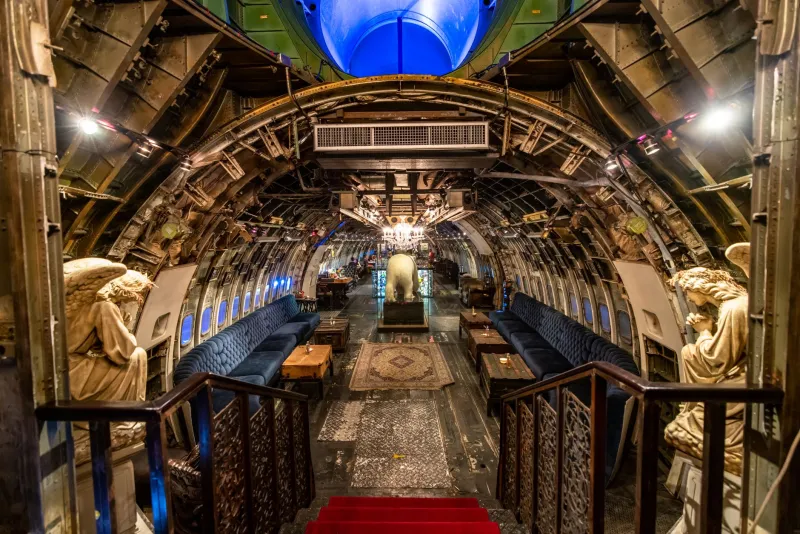
The sylph aesthetic — that gauzy, ethereal quality that Bangkok's most talked-about venues have made their signature — works precisely because it's detail-dense without being cluttered. A wall of hand-painted silk panels. A bar top inlaid with mother-of-pearl. A ceiling installation of suspended glass that catches light differently depending on where you're standing. These aren't impulse decisions. They're calculated investments in keeping your eyes busy and your mind engaged.
The more you look, the more you find. And the more you find, the less you think about leaving.
How to Spot a Real Venue vs. a Tourist Trap
Now, the practical part — because not every venue in Bangkok that looks stunning has actually thought any of this through. Here's what to watch for:
The lighting test: If the room is either too bright (think fluorescent overhead) or so dark you can't read the menu, that's a red flag. Elite venues hit a precise middle ground.
The conversation test: Can you talk to the person next to you without shouting? If not, the sound design is either lazy or deliberately designed to disorient you — neither is a good sign.
The wandering test: Is there anything to discover beyond the main room? A venue that's all one open floor plan with nowhere to explore is usually prioritizing capacity over experience.
The detail test: Look at the surfaces up close. Are the finishes intentional and consistent, or does it feel like someone threw a lot of stuff at a wall? Quality venues sweat the small stuff because they know you'll eventually notice it.
The staff test: This one's underrated. In a genuinely well-designed venue, staff move through the space with ease — they're not bumping into furniture or shouting over the music to communicate. A room that works for the people who operate in it every night is a room that works for guests too.
The Bottom Line
The sylph effect isn't magic, even if it feels like it. It's the result of careful, intentional design by people who understand that the best nightlife experience isn't about overwhelming your senses — it's about perfectly calibrating them. Bangkok's top venues have figured out how to build spaces that feel genuinely transportive, and once you know what to look for, you'll never walk into a mediocre venue the same way again.
Consider yourself warned: the next time you look up and realize it's somehow 1 a.m., you probably found one of the good ones.